wst After I dropped my wife off at the airport for what she called a “wellness retreat,” my twelve-year-old granddaughter leaned forward and whispered, “Grandpa… we can’t go back home. I heard Grandma talking about money… and making it look natural.”
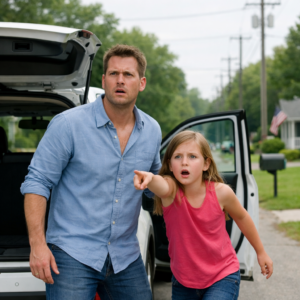
At sixty-three, I believed fear had exhausted its imagination with me.
I had already met the obvious kinds. I had stood in unemployment lines after layoffs and done the arithmetic of rent against pride. I had sat in hard plastic hospital chairs at three in the morning while doctors moved in and out of curtains and my heart learned new, unpleasant rhythms. I had lain awake through years when the mortgage seemed larger than any future, when one cracked transmission or one bad winter or one canceled contract felt capable of toppling everything. By my early sixties I had come to think of fear as an old injury. Not healed, exactly. Just familiar. Something you adjusted your gait around. Something you carried while continuing to work, to drive, to pay bills, to shovel the walk, to answer the phone, because life has never shown much respect for people who want to stop and collapse for a while.
That understanding shattered on an ordinary October morning in Vancouver, in a parked car outside the departures terminal, when my eight-year-old granddaughter leaned forward from the back seat and asked, in a whisper so strained it barely sounded like hers, “Grandpa, can we not go home right now?”
The morning had looked harmless.
October in Vancouver is very good at looking harmless. The trees along Grant McConachie Way were all copper and flame, the wet edges of the curb shining from rain that had already passed through before dawn. The air had that cold cedar sharpness the city gets when the mountains have taken the first snow and the ocean decides to answer by breathing differently. Everything smelled clean and damp and temporary. You could believe, on a morning like that, that the world was merely changing seasons in an orderly fashion and that what needed fearing would arrive dressed properly and give you time to prepare.
Margaret sat beside me in the passenger seat with her carry-on upright between her knees and her overnight bag at her feet, talking about what she called her wellness retreat in Kelowna. Five days. Hot springs, yoga, “intentional rest,” a phrase she had used so many times in the previous two weeks it had started sounding rehearsed even before I knew why. She had been telling people about the trip with a brightness that didn’t quite match her recent behavior at home, which had been cool and distracted and somehow too attentive at the same time, like an actor who knows she’s in the final scene and wants to make sure everyone notices the setup without ever seeing the trap.
At the terminal drop-off, she barely looked at me.
“Don’t forget the orchids in the front window,” she said as she opened the door. It came out more like an instruction to housekeeping than anything a wife might say when leaving her husband for five days.
I leaned across the console for a kiss. She turned her cheek automatically, already reaching into the back for her suitcase. I remember that little movement with painful clarity now. Not dramatic. Not hostile. Just practiced distance. The kind built slowly enough that you tell yourself it means fatigue, stress, age, any number of things besides what it actually means.
I watched her walk toward the terminal entrance, wheels clicking behind her. Her posture was very straight. She passed through the first set of automatic doors without looking back. Not once. Not even the half-turn people make by habit after thirty-five years with another person. The crowd absorbed her.
I told myself it meant nothing.
That was what I had been doing with Margaret for months by then—taking things that meant something and teaching myself they meant nothing.
Then Sophie spoke.
She had been quiet the entire drive, which in itself should have warned me. Sophie is one of those children who usually seem to generate their own weather. She narrates clouds and asks why dogs’ paws smell like crackers and makes up songs about toast and can fill forty minutes in the car by herself without once noticing the silence of the adults. She had been with us for two days because Catherine, my daughter, was covering a brutal sequence of shifts at St. Paul’s and childcare had collapsed in the way childcare always seems to do when hospital schedules and ordinary life collide. There was nothing unusual about Sophie staying over. She loved our house. She loved Margaret’s cocoa and the old wool throw in the den and the rosebushes along the back fence and the small box of colored pencils I kept in the kitchen drawer because somewhere along the line I learned that children always draw better when adults act like paper is as necessary as cutlery.
But now she sat in the back seat with both hands folded in her lap so tightly her knuckles had gone pale. In the rearview mirror her face looked wrong. Not tearful. Not petulant. Frightened in the still, airless way that told me she had been carrying the fear for a while.
“What is it, sweetheart?” I asked.
“Can we not go home right now?”
I turned fully in my seat.
“What do you mean?”
She swallowed. Her eyes flicked toward the airport doors where Margaret had disappeared and then back to me in the mirror.
“I heard Grandma talking last night,” she said. “After you went to bed.”
Something cold moved through my chest.
Not panic, not yet. More like the sensation of a floor shifting one quiet inch under your feet. A small internal sound that tells you the structure is not where you thought it was.
“Talking to who?”
“On the phone. In the kitchen. She thought I was asleep.”
There is a particular way children speak when they are trying not to betray an adult they have always been told to trust. Their loyalty and their alarm fight in real time, and you can hear both. Sophie’s voice had that sound.
“What did you hear?” I asked, and I kept my tone gentle because I could see she was already worried I might decide she had done something wrong merely by listening.
She looked out the window for a second as though collecting the courage from the wet light outside.
“She was talking about money,” she said. “A lot of money. And she said once you were gone, everything would be hers.”
The bus lane beside us kept moving. An airport shuttle hissed to a stop, took in suitcases, released a burst of cold air and perfume and coffee smell, then pulled away. Somewhere two cars honked at each other with the ordinary impatience of people late for flights. The world did not pause to acknowledge what had just entered mine.
I kept my hands on the steering wheel.
“Did she say anything else?”
Sophie nodded once. Her throat moved. “She said she would make it look natural. That nobody would suspect anything.”
Every instinct in me rose immediately to reject the sentence. To explain it. To put it somewhere safer. Children mishear things. Adults joke badly. Television dialogue leaks through walls. People use phrases out of context. That was the first wave of my mind, desperate and fast and built entirely from the need not to believe.
But another part of me was already moving more slowly and more seriously through recent months.
Margaret’s questions about my life insurance. Not once, but several times, and in oddly specific terms. Would it pay out equally if death came after prolonged illness versus sudden accident? Was the annuity rider still in place? Did the policy include automatic release if there was no autopsy? She had framed all of it as prudent late-life planning, which sounded reasonable because prudent late-life planning is exactly the sort of thing older couples are supposed to talk about. I had answered without giving it another thought.
The pills. The amber bottle on the bathroom counter that she had placed beside my toothbrush with such practical affection. “Alan thinks these will help with the fatigue and blood pressure,” she’d said six months earlier. Alan being Dr. Alan Forsythe, my physician for eleven years, the man who had overseen cholesterol numbers and bloodwork and one minor heart scare with the easy confidence of someone whose authority long ago stopped needing performance. The pills were vitamin supplements, Margaret said. General support. Men your age need extra care, Alan said. I had taken them because I trusted them both.
And since then there had been the dizziness.
Nothing dramatic at first. A little weakness in the legs. Nausea that moved through me without pattern. A strange fatigue that seemed to come from somewhere deeper than ordinary age or ordinary poor sleep. I told myself it was age. We all do that. We feed symptoms to aging because aging is simpler than suspicion. Margaret would stand in the bathroom doorway and ask if I had taken my pills yet, voice so warm it almost embarrassed me to feel comforted by it.
There had also been her distance. The cheek turned when I leaned in. The long absences inside the same house. The way she seemed to sharpen only around practical questions—finances, prescriptions, account passwords, what would happen if one of us passed first. Her eyes had stopped resting on me with any softness months before I admitted it to myself.
Now Sophie sat behind me, white-faced and very brave, waiting to see whether I would dismiss her.
“Grandpa,” she whispered. “I think Grandma wants to hurt you.”
I looked at her in the mirror and saw in that moment exactly how much had been asked of her by the simple act of telling the truth. An eight-year-old should not have to deliver a warning that sounds like the beginning of a crime documentary. An eight-year-old should not have to calculate whether the adult she is warning will believe her over another adult. She had been carrying that alone since sometime in the night, and her relief or devastation was about to depend on my face.
“All right,” I said.
Her shoulders dropped a fraction.
“We’re not going home,” I told her.
The relief on her face broke my heart. It told me she had been expecting argument. Or disbelief. Or the bright reassuring lie adults tell children when they don’t want to feel responsible for what might be true.
Instead I started the car and drove three blocks away to a coffee shop near the airport, one of those places full of laptops and steamed milk and people rearranging flights on their phones. I ordered Sophie a hot chocolate with extra whipped cream because I wanted the world, however briefly, to remember she was a child. I ordered myself a black coffee I did not drink. Then I took out my phone and called a number I had not used in nearly fifteen years.
Marcus Webb answered on the third ring.
He had been a private investigator my father used once in a business dispute when I was in my twenties. The sort of man who speaks as if he already knows the answer and is waiting to see whether you do. I had kept his number in old notebooks, then in my contacts, not because I thought I would need him, but because some people feel useful enough to preserve against hypothetical disaster.
“It’s been a long time,” he said.
“Yes.”
“What kind of trouble is it?”
I told him. Not every detail, because I was still finding language for it. But enough. Margaret’s trip. Sophie’s warning. The insurance questions. The pills. Dr. Forsythe’s name. The airport. The fact that my wife had not looked back.
He asked for the flight number and the retreat details. I gave him both.
Then he said, “Don’t go home. Give me forty minutes.”
Sophie sat across from me drawing with the little notebook she always kept in her backpack. She did not ask what I was doing. Once or twice she looked up, searching my face, then went back to her drawing. I watched her and thought that there are moments when the size of a life changes without any outward sign. The room around you remains coffee and glass and murmuring strangers, but the axis has tilted. You are no longer deciding whether you are in danger. You are deciding what kind of danger it is.
Marcus called in thirty-six minutes.
“She never boarded.”
I leaned back in the chair slowly. “What?”
“She checked luggage and cleared the outer terminal but did not get on the plane. She exited through a service-side route after forty minutes, took a car to the Sanderson Executive Hotel seven minutes from the airport, and checked in under her maiden name.”
For a second I could not place the maiden name because I had not heard it spoken in over three decades. Margaret Coyle. It sounded like the name of a woman who had died and left her body walking around in my wife’s shape.
“She’s not alone,” Marcus said.
I closed my eyes.
He sent the photograph while we were still on the call.
It was taken in the hotel lobby from a distance and slightly from above, likely from a mezzanine or security angle Marcus had charmed his way into accessing faster than most men would have considered possible. Margaret stood at the check-in desk, one hand resting on the counter, body angled toward the man beside her in a way I had not seen directed at me in years.
Dr. Alan Forsythe.
My doctor. Eleven years. White hair at the temples. Impeccable posture. The same dark overcoat he wore in winter when he wanted to look slightly less clinical and more like a man you could trust with complicated news.
For a moment I simply stared at the image while the café noise swam away from me.
The pills.
The insurance questions.
The sudden wellness retreat.
My wife and my physician in a hotel under her maiden name near the airport while my eight-year-old granddaughter sat across from me with whipped cream on her lip and the expression of a child pretending not to be terrified so her grandfather would have room to think.
“Do not confront them,” Marcus said.
I swallowed. “I wasn’t going to.”
“Yes, you were,” he said matter-of-factly. “You were picturing it.”
He was right. Somewhere inside me a younger, more foolish man was already marching down the hotel corridor, demanding explanation from the door, still clinging to the fantasy that hearing the words directly from their mouths would change them. But the older, truer part of me knew something else. If what Sophie heard was real, and if the photograph was what it looked like, then surprise was my only ally and drama would be my burial.
“What do I do?” I asked.
“Find a police contact before you move. A good one.”
I had one name.
Years earlier, a former colleague from the port authority had spoken highly of Detective Frances Hoang, who handled complex financial and domestic crime cases with a level of patience that frightened defense attorneys. I had written her name down after hearing him describe how she built cases the way some people build boats: nothing rushed, every joint meant to hold under pressure.
I called her from the parking lot after I settled Sophie with a refill of hot chocolate and a muffin she did not touch.
When I told Detective Hoang the outline, she did not waste time telling me how extreme it sounded. That alone made me trust her more.
“What you have so far,” she said, “is a child’s overheard statement, suspicious medical symptoms, a possible false travel story, and your wife meeting with your physician under an assumed identity. That is not enough for an arrest. It is enough for concern. The concern becomes probable cause if you personally hear incriminating content or if we can secure physical evidence from the medication. Do not confront. Do not tell anyone else in the family. Do not go home until you have decided what story you’re telling if she asks why.”
“I can’t just stay away indefinitely.”
“I didn’t say indefinitely.” She paused. “Can you get to the hotel discreetly?”
“Yes.”
“Then go. Listen if you can. The moment you hear enough, call me.”
There is no good way to arrange childcare in the middle of an unfolding attempted murder investigation. There is only triage.
I drove Sophie to Ruth Ellison’s house three streets over from mine. Ruth is a retired schoolteacher, seventy-seven, soft-voiced, sharp-eyed, and one of the few people left in the neighborhood who still sends handwritten thank-you notes and notices immediately when a child is frightened for reasons beyond childhood. I told her there had been a family emergency and I needed Sophie to stay for a few hours. Ruth looked at my face, then at Sophie’s, and did not ask questions.
“I’ve got banana bread in the oven,” she said. “We’ll be just fine.”
Sophie stood in Ruth’s entryway holding her backpack to her chest.
“Be careful, Grandpa,” she said.
I bent and kissed her forehead. “I will.”
Then I drove to the Sanderson Executive Hotel with a coldness in my body that was no longer fear exactly but something more functional and more dangerous. Focus.
Marcus met me in the underground garage. He had already secured the room number.
“Third floor. End of the hall. They checked in as Mr. and Mrs. Coyle.” He watched my face as he said it. “You sure you want to do this yourself?”
“No,” I said honestly. “But yes.”
He nodded once. “Then listen. Don’t knock. Don’t react until you’re out of range. People about to inherit money get unpredictable when surprised.”
I took the elevator up alone.
The hallway smelled like industrial carpet cleaner and air conditioning. Standard hotel quiet. Doors identical on either side. Somewhere far off an ice machine dropped cubes with mechanical indifference. I walked slowly, every nerve in me alert and oddly calm at once.
At first I heard nothing from the room.
Then, as I got closer, voices.
Margaret first.
Her voice was light. Light in a way I had not heard it in years. Not the brittle brightness she put on at dinner parties or the carefully kind voice she used with Sophie. Actual lightness. Joy, almost. That hurt me more quickly than anything else. The realization that I was hearing not merely betrayal, but happiness inside it.
“I still can’t believe how easy this is,” she said.
Forsythe laughed softly. “You’ve been meticulous. That’s why.”
“The insurance alone is eight hundred thousand. Then the investment accounts, then the house. Once it’s all liquidated, it’s close to two million.”
There was a pause, perhaps the sound of glasses being set down. Then his voice again, lower.
“And with the current dose, it’ll continue looking like systemic decline. At his age, with those symptoms, nobody’s going to question it if we’re careful.”
My hand went flat against the wall.
Margaret answered without hesitation. “Small amounts were always the key. Nothing dramatic. Nothing that sends anyone to a toxicology panel.”
Forsythe made a small approving sound.
“I’ll increase it when I get back,” she said. “He’s weaker already. By Monday, it should be finished.”
Finished.
That was the word she chose for my life.
I do not know how long I stood there after that sentence. Long enough to understand that the horror was complete and no reinterpretation would save it now. There are moments when reality becomes simpler than emotion can manage, and you are forced to act by clarity because feeling has become unusable.
I walked back to the elevator without making a sound. In the garage I sat in my truck for a full minute before my hands worked well enough to dial Detective Hoang.
She answered immediately.
“I heard enough.”
“Tell me exactly.”
I did. Every phrase I could remember. Insurance. Liquidation. Dose. Finished.
When I was done, she said, “Go home. Do not let on. I’m getting a warrant request started and a toxicology team lined up. Bring me the pill bottle without contaminating it if you can, but don’t spook her. We need her continuing the routine.”
“So I just go home and let her—”
“No,” Hoang said firmly. “You go home and let her think you still trust her. There is a difference. We’ll protect you. But if she realizes you know before we have the evidence, she’ll burn everything.”
She was right. I hated that she was right, but she was.
When I got back to Ruth’s, Sophie was sitting at the kitchen table coloring a horse purple while Ruth spread banana bread with butter thick as plaster.
She looked up when I came in. Her eyes searched my face, looking for something she couldn’t have named.
I nodded once.
“You did good,” I said softly.
Ruth, blessing her, did not ask what that meant.
That evening, after Sophie was asleep in the guest room and the house held the tense stillness of people pretending to rest, I sat in my den with the lights off and thought through every practical step between knowledge and survival.
I needed the bottle. I needed the house secured. I needed Catherine informed eventually, but not yet—not until I could tell her something solid and not just ask her to believe that her mother had turned murderous. I needed to know whether Margaret would return from the hotel first or go somewhere else. I needed the story for why I was at home and calm when my insides felt flayed open.
At nine-thirty, Detective Hoang called.
The emergency warrant process was moving. A forensic pharmacist was on standby. Her team would be prepared to collect and replace any suspicious pills with identical inert capsules once I got them the bottle. She wanted audio if possible, and she wanted house entry points for camera placement if I consented.
“I consent,” I said.
“Good. We’ll move fast tomorrow after she returns.”
“She was supposed to be gone five days.”
“And now?”
“I don’t know.”
“People running a long con don’t like being away from the mechanism too long,” Hoang said. “Especially when the mechanism is a person.”
I did not sleep much.
Margaret came home the next afternoon instead of five days later.
She wheeled her suitcase in smiling lightly, cheeks pink from the cold, scarf wrapped at her throat, and said, “I missed home,” as though she had been away collecting peace rather than timing my death in a hotel room with the man who prescribed the poison.
There are performances in life that win applause and performances that keep you alive. The next week would require the second kind.
I kissed her cheek when she offered it.
That is the detail that still horrifies me when I remember it. Not because I kissed the woman who was poisoning me, but because for a split second my body nearly moved from old habit and sought her mouth. Thirty-five years will train reflexes into the bone. Betrayal doesn’t erase the routes love carved. It only poisons them.
“How was the retreat?” I asked.
“Quiet,” she said. “Good for me.”
I almost laughed at the efficiency of the answer.
That night, after she went upstairs to shower, I carried the amber bottle to the bathroom with a pair of disposable gloves Hoang had arranged for me to retrieve from the mailbox. I transferred it into a sealed evidence bag, then swapped it with the identical bottle her team had prepared and left hidden behind the spare towels in the linen closet that afternoon while Margaret was still driving home.
My hands shook then. Not from fear of the work. From the intimacy of it. I had touched that bottle every day for six months. The ordinary domesticity of it had made the violence possible.
The original went to Hoang’s team that night. The replacement sat on the counter where Margaret expected it.
Two technicians came in at dawn the next morning while Margaret still slept. They worked with the efficiency of people who understand that everything they are doing exists to make sure someone lives through the week. Cameras in the kitchen, the den, the hallway outside our bedroom, the medicine cabinet angle. Microphones where audio would matter. They were in and out in twenty-two minutes. Ruth took Sophie for breakfast so the child would not wake into any of it. By eight o’clock, the house looked unchanged.
Margaret brought me the first dose at eight-thirty.
She had arranged the pills in a small white ramekin beside toast and tea on a tray, a level of care she had not shown me in months until the poison required supervision. I sat at the kitchen table in my robe and slippers and looked up at her as though gratitude still made sense.
“You’re fussing over me,” I said.
She smiled. “Someone has to.”
I picked up the capsule, let it touch my lips, then appeared to swallow while palming it against my molars the way Hoang’s team had coached me. Margaret watched. Not obviously, but she watched. I took a sip of tea and set the cup down.
“There,” I said.
Her face softened—not with love. I could see the difference now. It was the satisfaction of a person whose machinery is still running.
For the next six days I acted weaker than I was.
I did not overplay it. Detective Hoang warned that dramatic symptoms might alert Margaret if they no longer matched what she expected. So I kept it close to truth. A little slower standing from chairs. One hand on the banister going upstairs. An occasional pause in conversation. I told her the dizziness still came and went. I mentioned nausea once while pressing a hand to my stomach as if embarrassed by it. She responded exactly as she should have if her concern were real: warm voice, furrowed brow, hand to my shoulder. And exactly as I now understood her to mean it: reassurance that the plan was progressing.
Three times a day she brought the pills. Three times a day I pretended to swallow and later flushed the inert capsules.
Hoang’s team watched everything.
By the third day, their toxicology results came back. The original capsules contained a cardiac glycoside compound in subtherapeutic but cumulative doses. Not enough to kill immediately. Enough to build weakness, nausea, dizziness, heart irregularities, and, with increases, eventual organ failure or cardiac collapse. In an older man with a trusted physician and a wife reporting gradual decline, it would have looked tragically plausible.
“You were very close,” Hoang told me over the phone.
I sat at the kitchen table after hanging up and looked at the wood grain for a long time.
Very close.
There are phrases that alter the weight of the air around you. That was one.
On the fourth night, I woke to hear Margaret moving downstairs.
I stayed in bed until the floorboards over the den stopped settling. Then I rose, moved to the top of the staircase, and listened.
Her voice drifted faintly up from the kitchen. Warm. Low. The voice she used in the hotel.
The microphone caught the rest. I heard the recording the next morning with Hoang in the unmarked car parked half a block away.
“He’s weaker,” Margaret said.
Forsythe asked, “How much longer?”
“I’m going to increase it,” she said. “By Monday it should be finished.”
Finished again.
Then, after a pause, she laughed softly and said, “The old fool still thanks me every time.”
Detective Hoang stopped the recording there.
“That’s enough,” she said.
The arrest happened the next morning.
There is something brutal about the ordinariness of a house right before police enter it. The kettle had not yet boiled. Margaret was in her robe. The newspaper lay half-read on the hall table where I had left it. Outside, the rain had begun and was tapping lightly at the front windows as if it had some minor domestic business of its own.
I stood in the hallway when the doorbell rang.
Margaret opened it expecting, perhaps, a parcel or a neighbor. She found Detective Hoang, two uniformed officers, and the warrant team.
I watched her face travel from confusion to recognition in less than a second. Then she turned and saw me standing behind her upright, fully dressed, no tremor in my knees, no hand to the wall.
She understood instantly.
“You knew,” she said.
It wasn’t a question.
“Sophie told me,” I said.
That was when the mask tore.
Not all at once. No wild dramatic speech. Just one small involuntary flicker of contempt that flashed across her face so fast I might have missed it if I had not spent the whole week studying what lived underneath her expressions.
“That little brat,” she said.
I will tell you now, because the truth deserves its full shape, that that sentence hurt me almost more than the hotel hallway. It did not merely expose her. It exposed the way she had already rewritten an eight-year-old child into an inconvenience in her narrative. Sophie was not family in that moment. Not even an obstacle worth respecting. Just the little brat who had interrupted the schedule.
I stepped closer.
“Sophie saved my life,” I said.
Hoang read the warrant. The officers took Margaret’s wrists and turned her gently but firmly toward the wall. She did not cry. She did not beg. She did not turn to me and offer some desperate reinterpretation. Her composure, if anything, sharpened under arrest. She looked almost relieved to no longer be performing wifehood.
“Alan won’t protect you,” Hoang told her as they cuffed her.
For the first time, fear crossed Margaret’s face.
Forsythe was arrested forty-three minutes later at his office between patients. Investigators found deleted messages restored from his phone, dosage notes hidden under misleading file names, insurance searches on his office computer, and a string of communication with Margaret stretching back eighteen months. They had not stumbled into murder. They had built toward it carefully. That made the prosecution cleaner and the grief uglier.
Catherine arrived at my house before noon.
I had called her after the arrest because there is no kind way to let a daughter learn from the news that her mother tried to murder her father and used her own child’s fear as collateral. She came still in hospital scrubs, hair escaping its tie, face white and stripped of every professional calm she used at work.
She stood in the front hall looking from me to the open evidence boxes to the plainclothes officers still moving through the kitchen and said only, “What happened?”
I took her into the den and told her.
I told her about Sophie in the car, the hotel, Alan Forsythe, the pills, the recordings, the arrest. Not every grisly detail at once, but enough that by the time I was done she had gone from disbelief to a kind of stunned, bodily sorrow I could not fix.
“My mother?” she said finally, as if she needed to hear the impossibility in the noun itself.
“Yes.”
Catherine covered her mouth with both hands.
Then, after a long shaking breath, she said, “Where’s Sophie?”
“At Ruth’s.”
The look of relief that hit her then was almost violent. Whatever else a woman may be in a moment like that, she is still, first and last, the mother of her child.
“She told you,” Catherine whispered.
“She did.”
Catherine sat with that. Then she said, in a voice that sounded older than mine, “I left my daughter in this house.”
“No,” I said sharply. “Do not do that to yourself. You left your daughter with her grandparents. One of them saved me. The other one—” I stopped. I did not yet have the language.
She cried then. Quietly. In great exhausted shudders that made me think of all the ways adulthood asks women to go right back to functioning after the floor falls through beneath them.
The formal charges came quickly because the evidence was so complete. Attempted murder. Conspiracy. Fraud. Professional misconduct in Forsythe’s case alongside criminal charges. The media found out faster than I would have liked, but there is no controlling that once a respected physician and a woman married thirty-five years are led through the justice system together. Reporters called. I declined interviews. Catherine gave one statement through a lawyer asking for privacy for herself and Sophie. Ruth told two local journalists off so sharply on my front walk that they did not return.
The trial began eight months later.
I attended the first three days and never again.
People have asked why. Some imagine I lacked courage. Others assume the opposite, that I was too dignified to sit through the details. The truth is simpler and less flattering. I attended long enough to hear the structure of the case laid out in open court because some part of me still needed the world to acknowledge, in a room with flags and a judge and a transcript, that I had not imagined what happened. Then, once I had heard enough, I realized I did not need to sit there while strangers with legal vocabularies turned thirty-five years of my marriage into exhibits.
I had already heard enough.
The recordings were played. The toxicologists testified. The financial records came in. Forsythe’s attorney tried to paint him as romantically compromised rather than homicidally deliberate, which fooled nobody. Margaret’s defense tried, for a week or so, to suggest she had merely followed medical advice without understanding the substances involved. Then the kitchen recordings surfaced in full, including her line about increasing the dose and her laugh over “the old fool,” and that angle died the death it deserved.
The jury convicted both.
Life in prison for Margaret.
Thirty years for Forsythe, reduced from what it might have been because he cooperated too late to call it conscience and early enough to be useful.
I did not attend sentencing.
By then, I had understood something important: justice and witnessing are related, but they are not identical. I had witnessed what I needed. The rest belonged to process.
What came after was quieter and, in some ways, harder.
I had thought the arrest would release me into relief. And relief was there, certainly. Relief that I was alive. Relief that the pills were gone. Relief that no one would stand over me in the kitchen pretending to care while measuring dosage. Relief that Sophie would never again have to sit alone with a secret large enough to kill.
But relief was not the dominant texture of those first months.
Silence was.
The house remained the same. The same staircase. The same blue bowl by the door. The same wool throw on the sofa. The same side of the bed empty now not because of a trip or a late shift but because the woman who had inhabited it turned out to have been carrying a private future in which I did not exist. Every room became a place where memory needed reclassification. A mug on the shelf. A photograph in the hall. A sweater left over the chair. Ordinary objects, all of them, suddenly radiating questions I could not answer.
When did she stop loving me?
Had she ever?
At what point does annoyance become contempt, contempt become greed, greed become logistics, logistics become poison in an amber bottle by the sink?
I did not ask those questions aloud often because most people, even kind people, want your healing to take a shape that reassures them. They want you to say she changed, or the affair poisoned her judgment, or there were signs in childhood, or some story they can file under why bad things happen to understandable people. But some stories remain resistant to understanding. They are not puzzles. They are ruptures.
What I could do, I did.
I changed my will.
I revoked every survivorship arrangement that still carried her name.
I had every prescription from the previous two years independently reviewed by a new internist, a severe and excellent woman named Dr. Mendez who sat in my den with a legal pad and a box of evidence photographs and went through everything with the thoroughness of a bomb technician. She found no other altered medications, but she did identify symptoms I should never have shrugged off and a pattern of cumulative dosing that confirmed just how close they had been to making my decline irreversible.
“You trusted your physician,” she said when she saw the shame flicker across my face. “That is not a defect in you. That is the foundation medicine is supposed to stand on.”
I nodded, though in the months that followed I found trusting any white coat nearly impossible.
I sold the bedroom set and repainted the room.
I had the front locks changed, then changed them again, because survival turns some people compulsive and I was not immune.
I started sleeping with the hall light on.
Catherine moved through those months like someone learning a new body.
She was furious at first. Then sick with grief. Then ashamed of the grief because how dare she mourn the mother who had tried to kill her father? Then protective, so protective it was almost aggressive. She came by the house more than she needed to. Stocked my fridge. Checked the locks. Read every update from the prosecutors before I did. Took Sophie to therapy within ten days and herself into therapy three weeks after that when she realized she was beginning to speak to every patient’s family as though one of them might secretly be dangerous.
“Am I supposed to hate her?” she asked me one night at my kitchen table after Sophie had gone upstairs to sleep.
The question sat between us, terrible and honest.
“I don’t know,” I said. “I don’t know what you’re supposed to feel.”
She looked down at her tea.
“I keep remembering ordinary things. Her teaching me to braid my hair. The way she cut apples for Sophie with the peel still on because she said vitamins hide in the skin. The songs she sang in the kitchen. And then I remember the pills.” She swallowed hard. “How do those belong to the same woman?”
“They may not,” I said.
Catherine frowned. “What does that mean?”
“It means the person you knew was real in some moments. And the person who did this was also real. Human beings don’t become singular just because we wish they would.”
That did not comfort her. I had not meant it to. But it was the best truth I had.
Sophie carried the winter differently.
Children do not process evil the way adults do. Adults look for motives, structures, timelines, pathology, betrayal, all the adult machinery of understanding. Children often reduce things to one unbearable hinge: I heard it. I said it. Then everything changed.
She had nightmares for months. Some were about Margaret directly, though she stopped calling her Grandma almost immediately and shifted to saying her name with careful flatness. Some were about me disappearing. Some were about being in the back seat again and no sound coming out when she tried to speak. Catherine would call me at midnight or two in the morning, and I would talk to Sophie through the phone while she lay in bed clutching the stuffed rabbit she had loved since she was three.
I never made the calls about the case.
I talked about normal things. The bird feeder in my yard. The stupid squirrel that kept stealing walnuts from the bowl on the fence. The nature documentary about wolves we had watched and paused seventeen times because Sophie had questions. The pancakes I planned to make the next time she slept over. The world outside the nightmare, waiting steadily for her to return to it.
She always did, eventually.
One evening in January, when the rain had been falling for six days straight and the whole city felt underwater, Sophie sat cross-legged on the rug in my den drawing while I sorted mail.
Out of nowhere she asked, “What if I didn’t tell you?”
My hand stopped on an envelope.
I looked at her. She kept coloring, purple marker moving across the page in slow deliberate strokes.
“What if I stayed quiet?” she asked again. “Would you be dead?”
There is no training for answering a question like that from a child you love more than language can hold. The obvious adult instinct is to deny the shape of it. To say no, honey, something else would have happened. But children know when you are protecting them with fiction, and fiction becomes a second wound when they are already carrying the first.
So I answered carefully.
“I don’t know what would have happened,” I said. “But I know what did happen. You told me. That’s real. That’s the thing we know.”
She looked up.
“Are you mad I listened?”
My throat closed so fast it hurt.
“No,” I said. “I am grateful you listened.”
She considered that.
“Even though it was private?”
“Yes.”
“Even though it was Grandma?”
“Yes.”
Then, after a moment: “Because it was wrong?”
“Because it was dangerous. And because sometimes the truth asks us to betray the wrong person in order to protect the right one.”
She nodded slowly. That answer seemed to settle something.
Children do not always need simplification. Sometimes they need language sturdy enough to stand on.
By spring, the nightmares had eased. By summer, Sophie laughed in my kitchen again without first scanning the room. The therapy helped. So did time. So did routine. So did the fact that Catherine never once tried to force a version of forgiveness or family repair that would have required Sophie to betray her own memory of what she heard. That mattered more than people realize. Children heal best when the adults around them stop asking them to smooth the moral edges for everyone else’s comfort.
I began speaking publicly about the case the following autumn.
Not everywhere. Not sensationally. But when asked by a local seniors’ advocacy group whether I would speak at a small event about financial vulnerability in later life, I said yes. Then I said yes again to a medical ethics panel after Dr. Mendez suggested physicians needed to hear, from someone outside their profession, what betrayal of medical trust actually feels like inside a patient’s life. Then a third time to a community legal forum on domestic coercion among older adults.
Each time I stood up, my hands shook for the first few minutes.
Each time, I said some version of the same thing: that danger in later life does not always come with a stranger’s face. That being cared for and being controlled can look distressingly similar when the person doing the controlling knows your routines well enough. That poison, financial coercion, and emotional grooming are often wrapped in ordinary domestic gestures. That older men, not only older women, are vulnerable to intimate exploitation and often too embarrassed to name it because male pride and public competence are terrible companions in private terror.
After one talk, an eighty-year-old man waited until everyone else had left and then came up to me with tears standing in his eyes.
“My daughter’s husband wants me to sign over the acreage,” he said. “He says it’s just for efficiency. But it’s always just for efficiency right before the pressure starts.”
I gave him Detective Hoang’s number and watched his hands steady while he wrote it down.
That was when I understood the talks weren’t about me anymore.
Margaret wrote twice from prison.
The first letter came six months after sentencing. I almost threw it away unopened. Then I sat with it for an hour, the envelope on my kitchen table like a live thing, until curiosity or masochism or some combination of both won out.
The letter was three pages long and insulted me by being thoughtful.
No screaming accusations. No melodrama. No explicit confession either. Just an attempt at narrative. She wrote that I had been difficult for years in ways I did not understand. That life with me had become “a long season of obligation.” That Alan had made her feel seen. That the plan “grew out of a fantasy of escape” before “becoming something else.” That she was not asking forgiveness, only complexity.
Complexity.
I sat there reading the pages in my kitchen, the same kitchen where I had once thanked her for tea while she watched me pretend to swallow poison, and thought how remarkable it is that some people can bring the vocabulary of self-understanding to the scene of their own monstrosity and still not fully arrive.
I burned the letter in the metal bowl on the patio that evening.
The second letter I never opened.
By then I understood that answers from her would only generate more rooms inside a house I no longer wished to inhabit.
Marcus Webb remained intermittently in my life after all of this, which was not something I expected. It turns out surviving a conspiracy with the assistance of a semi-retired private investigator creates a peculiar bond. He started dropping by every few months “to see if you’re still impossible” and accepted coffee in the den as though it were owed to him by the structure of narrative. Once, during one of those visits, he looked around the room and said, “You’ve changed the house.”
“Some of it.”
“You needed to.”
“Yes.”
He nodded, then said the thing few others were blunt enough to say. “You’re lonelier than you let on.”
I didn’t deny it.
Loneliness after betrayal is not the same as loneliness after death, though it borrows some furniture. There is grief in both. But widowhood through murder rearranges trust itself. For a long time after Margaret’s arrest, I could not bear being observed while I drank anything I had not poured myself. Restaurants felt strange. Medical waiting rooms felt hostile. A hand on my shoulder from behind could trigger a flash of nausea before my mind caught up. My body had become wary in ways my intellect could not argue down.
So yes, I was lonely. Not constantly. Not theatrically. But honestly.
The first time I noticed the loneliness easing, I was standing in the front window watering Margaret’s orchids.
I had kept them, though for months I couldn’t have explained why. Maybe because they were innocent. Maybe because I resented the idea that she should define what got removed from the house and what did not. Maybe because in those first stunned weeks after the arrest, keeping something difficult alive felt like an act of defiance.
Orchids are petty little tyrants. Too much water and they rot. Too little and they sulk. Too much sun and they scorch. Too little and they refuse to bloom out of what feels like moral criticism. I had nearly killed all three by Christmas. Then Ruth, who somehow knew everything, came over one afternoon with a smaller pot, bark chips, and a sermon about root systems, and between the two of us we brought them back.
In late February, when the light was still weak and winter had not yet given any reason to trust spring, the first white bloom opened.
I stood there in my socks holding the watering can and felt something inside me unclench.
Not because flowers redeem attempted murder. Let us not become idiots. But because life, maddeningly, continues making things. Even after betrayal. Even after courtroom transcripts and evidence bags and sleeplessness and children in therapy. A white bloom opened in the window of my kitchen because the plant had enough light and the roots were not dead. Sometimes that is all recovery is at first.
Enough light. Not dead yet.
By the time Sophie turned twelve, she had become a child with a different gravity than before, but not a broken one.
We were sitting on my back steps one June evening after a long afternoon of planting tomatoes. Her knees were dirty. My back hurt. The dog Catherine had finally agreed to let her adopt from the shelter next town over was asleep in the grass pretending not to notice the squirrels.
She said, out of nowhere, “I used to think what I did was brave because I wasn’t scared.”
I looked at her.
She picked at a bit of soil under her thumbnail. “But I was scared. Really scared.”
“Yes,” I said.
She glanced up. “So maybe it was just because I loved you more than I was scared.”
For a moment I couldn’t speak.
Because there, in one sentence from a twelve-year-old girl, was the cleanest definition of courage I had heard in my whole life.
“That,” I said finally, “is exactly what brave is.”
She considered that with the seriousness she gives all things that matter.
“Okay,” she said. “I can work with that.”
There are people in this world who save lives without ever touching a weapon or a scalpel or a steering wheel in a storm. They save them by noticing. By listening. By speaking before fear convinces them silence would be safer. Sophie did that. Eight years old in the back seat of my car, hands folded in her lap, asking me not to go home.
I think often now about that morning and about all the futures that never happened because one child refused to keep an adult secret. There is an entire graveyard of possible endings behind my life now, and I walk past it daily. I do not dwell there, but I know it exists. In another version, the increased dose starts Monday. The weakness worsens. The doctor who is part of the plan says my age and heart and bloodwork explain enough. There is a funeral. There are casseroles. There is a grieving widow in tasteful navy accepting condolences while insurance clears. There is Sophie trying to carry something unspeakable with no proof and no language and no one wanting to stain a funeral with suspicion.
That version did not happen.
Because Sophie spoke. Because I believed her. Because Marcus answered. Because Hoang moved fast. Because Dr. Mendez later treated my distrust as injury rather than paranoia. Because Catherine, after the truth, chose her daughter’s safety over inherited loyalty. Because Ruth said yes without asking the wrong questions. Human beings survive not through singular heroism most of the time, but through chains of correct response. One person notices. One person believes. One person acts.
I used to think age made you harder to fool.
Now I know age mostly gives you more habits that can be used against you if the wrong person stands close enough.
I am more careful now.
I read labels. I watch faces. I keep my own keys and my own accounts and my own doctor appointments. I trust fewer people and trust them more deliberately. Some would say that is a sad way to live after what happened. Perhaps. But sadness is not the only thing in it. There is dignity in conscious living too. There is even peace.
Last October, on the anniversary of the airport morning, Sophie and I drove out to the water near Spanish Banks and sat in the truck with coffee for me and hot chocolate for her, the tide low and the mountains bright in the distance under a cold clean sky.
She is taller now, all elbows and long thoughts and the beginning of a teenage refusal to accept lazy explanations from adults. She was telling me about a school debate and how one boy in her class confused confidence with evidence, and I was laughing because I know several men in their sixties who have built whole careers on that confusion.
Then she stopped and looked out at the water.
“Do you think you’ll ever trust anyone like that again?” she asked.
I knew what she meant. Not just another woman, though perhaps that too in some abstract future. She meant trust in the larger sense. The kind where you hand somebody your ordinary life without checking every seam first.
I took my time answering.
“No,” I said. “Not like that.”
She turned toward me.
“Is that sad?”
I looked at her, then back at the water.
“No,” I said after a while. “I think it’s different. I think I know more now. And knowing more can feel lonelier at first, but it can also make the trust you do give more honest.”
She nodded as if filing that somewhere useful.
Then she smiled a little and held up her cup. “Good. Because I still trust your driving, and that feels risky enough some days.”
I laughed so hard I spilled coffee on my sleeve.
We drove home with the windows cracked despite the cold, and the whole way back I kept thinking about how life returns. Not the old life. Never that. But life. In jokes. In dogs sleeping in grass. In orchids blooming in winter. In a twelve-year-old girl rolling her eyes and then reaching over at a red light to squeeze your wrist once because she has become old enough to know when tenderness needs no speech.
The house is quieter now than it used to be, and in some rooms that quiet still lands hard. But it is an honest quiet. No hidden dosage. No smiling supervision. No one counting days until my death makes the math work.
When I water the orchids in the front window, I sometimes remember Margaret’s voice telling me not to forget them on the morning she thought she had one last clean road ahead of her. I do not hear that sentence the way I did in the beginning anymore. It has lost its power to sting and become instead a strange small monument to the limits of calculation. She thought she had arranged every variable. She forgot the child in the back seat. She forgot that love sharpens hearing.
At sixty-three, I believed I had already faced every kind of fear life could produce.
I was wrong.
But I also had not yet learned every form of courage.
That, it turns out, was waiting in the back seat of my car with her hands folded tightly in her lap, asking me not to go home.
THE END