Before I tell you what happened, I need you to step into my body for a minute—into my age, my fear, my exhaustion. I need you to feel how sixteen actually feels when life is still supposed to be made of homework and weekend plans and arguing over curfews.
Picture this.
You’re sixteen years old. You’re buckled into a Jeep you helped buy with your own money. The radio is low. Your dress still smells faintly like charcoal smoke and sweet tea. You’ve got a headache you told yourself was nothing, because admitting it was heartbreak would’ve made you cry in front of people who wouldn’t know what to do with your tears.
And then—rain. Not the polite kind. Not the kind that taps at the windshield like it’s asking permission. This is the kind of rain that slams down like it’s angry. The kind that turns asphalt into glass. The kind that makes the world look like it’s being erased, one sheet of water at a time.
Traffic slows. Headlights smear into bright streaks. Your hands clench on the steering wheel, and you whisper, without realizing it, “Please, please, please.”
And then metal screams.
Glass explodes.
Your body becomes weightless and then impossibly heavy, like you’ve been thrown into a washing machine full of knives. You taste blood. You smell gasoline. Your ears ring so loudly you can’t hear your own breath. And in the last thin sliver of consciousness, you think one clear thought that doesn’t even make sense until later:
Mom is going to be mad about the car.
That’s what trauma does. It makes you worry about the wrong thing at the worst moment, because somewhere deep inside you’ve learned that pain only matters when it inconveniences someone else.
My name is Serenity Carver. I’m twenty-one now, and for years I told this story like it happened to someone I used to know. Like it belonged to a different girl, a girl who lived in a big white house on James Island with palm trees out front and a porch big enough to host half the neighborhood. A girl whose life looked perfect if you drove by slowly enough.
But you can’t live through something like that and stay the same person. You either become smaller to fit the world that hurt you, or you become so much bigger it can’t contain you anymore.
This is the story of how I almost died at sixteen… and how my mother, lying in a spa chair with cucumbers over her eyes, decided that was an inconvenience she didn’t have time for.
It didn’t start with the crash. It never starts with the crash. The crash was just the moment the truth got loud enough that other people could hear it too.
The truth was already there when I was six.
That’s the year my dad died.
I still remember the way leukemia entered our house like an unwelcome guest that refused to leave. At first it was little things—the way Dad got tired sooner than he used to. The way he sat down on the porch steps and watched me ride my bike instead of running behind me with his hands out, ready to catch me if I wobbled. The way Mom’s smile became something she had to remember to put on.
My dad, James Carver, was the kind of man who made you feel safe just by existing near you. He had big hands that swallowed mine when we walked down the sidewalk. He smelled like sunscreen and sawdust because he was always fixing something, building something, making something better. When I fell off my bike and scraped my knees, he didn’t tell me to stop crying. He crouched down, held my face gently, and said, “Crying means it mattered. Then we fix it.”
For a while, I thought leukemia was something we could fix.
I remember the hospital room with its bright lights and the steady beep of machines. I remember coloring pictures on the tray table and taping them to the wall because I thought the nurses would like it. I remember Mom brushing my hair and saying, “Your daddy just needs time.”
Time was the one thing we didn’t get.
One week he was teaching me how to ride without training wheels, laughing every time I yelled, “Don’t let go!” even though I wanted him to. The next week he was gone.
After the funeral, our house didn’t feel like a house. It felt like a museum where everything was labeled “Do Not Touch.” Dad’s boots stayed by the door for months. His coffee mug sat on the counter like it was waiting. Mom moved through rooms like she was wearing a heavy coat made of grief, and sometimes I’d catch her staring at nothing, her face blank, her eyes somewhere far away.
For about a year, she tried. I’ll give her that. She tried in the way people try when they’re drowning and they don’t know it. She packed my lunches. She signed permission slips. She hugged me at night, her arms tight around my shoulders like she was afraid if she let go I’d vanish.
Then she met Colin Reed.
I didn’t know his name the first time she brought him home. I just knew the sound of his car in the driveway wasn’t Dad’s. I remember peeking through the living room curtains and seeing a sleek black SUV instead of the older sedan Mom used to drive. I remember the way she smoothed her hair, checked her lipstick, and told me, “Be polite.”
Polite. Like he was a coworker coming over for dinner. Like he wasn’t about to move into the space my father had left.
Colin Reed walked into our house like he belonged there. He was tall, broad-shouldered, expensive in every way that mattered to people who cared about money. He wore a watch that caught the light when he moved his hand, and he talked with the calm confidence of someone who’d never had to wonder if the world would take care of him. He owned construction companies—several of them—and he built luxury homes across the coast like it was a hobby.
He smiled at me like I was a formality.
“Serenity, right?” he said, and the way he said my name sounded like he was reading it off a clipboard.
I nodded.
He patted my head.
I was eight, and I remember thinking that no one who loved you patted your head like you were a dog.
Mom glowed around him. That’s the part that hurt the most, even more than Colin himself. I’d forgotten what she looked like when she wasn’t hollow. She laughed again. She wore dresses again. She started talking about vacations and renovations and “fresh starts.”
At first, I wanted to be happy for her. I wanted her to feel less broken. I told myself that if she was smiling again, maybe our house would stop being so quiet.
But there’s a difference between healing and replacing. And my mother didn’t heal. She swapped out grief for something shinier.
Two years after Dad died, Mom married Colin in a beachfront ceremony with white chairs in the sand and photographers everywhere. I stood in a pale dress and held a basket of flower petals because that’s what little girls do in weddings, even when their stomachs twist like they’re being wrung out.
The day of the wedding, my grandfather stood beside me, his big hand resting on my shoulder like an anchor. Clarence Brooks—former police chief of Charleston—was a man people respected without question. He had a way of looking at you that made you feel like he could see straight through the lies you told yourself.
“Your daddy would want you safe,” he murmured to me as we watched my mother walk down the aisle. His voice was low, careful. Not bitter. Just real.
I didn’t answer because I didn’t know what safe meant anymore.
Nine months after the wedding, Haven was born.
My half-sister arrived like the sun rose just for her.
The nursery took over half the house. Soft pastel walls. A handmade crib Colin had custom-built by one of his contractors, as if buying a crib from a store would’ve been an insult to their wealth. A nanny moved in—Ms. Lila—who was kind in the way staff can be kind while still being staff.
My bedroom got moved.
It happened on a random Tuesday when I came home from school and found cardboard boxes stacked in my room. My posters were taken down. My soccer trophies—my proud little line of proof that I existed—were wrapped in newspaper and shoved into a box without care.
Mom stood in the doorway, clipboard in hand, like we were rearranging furniture instead of my life.
“Haven needs the larger room,” she said, as if it was obvious.
My old room had a balcony that looked out onto the yard, onto the palms swaying and the long driveway and the porch that used to feel like home.
The new room was above the garage, small and hotter in summer, colder in winter. It smelled faintly like old paint and car oil. It was the kind of room you put someone in when you wanted them nearby but not seen.
That was the first time I realized my mother could look at me and not see me at all.
Over the next few years, I became background noise in my own life. Haven got new clothes every season. I got leftovers—hand-me-downs that still smelled like her fruity shampoo because Mom washed our clothes together and never bothered to separate them. Haven got dance lessons and a tiny pink bike and birthday parties with balloon arches and photographers. I got reminders to stay out of the way.
Colin paid for everything, and people in our neighborhood acted like that made him a hero. He donated to charities. He shook hands with important people. He smiled for the cameras. At home, he treated me like a stray cat that kept returning to the porch no matter how many times you shooed it away.
“Don’t leave your shoes there,” he’d say, irritated, like my existence was clutter. “Why is your backpack in the hallway? Serenity, clean up after yourself.”
He never asked about my day. Never came to my soccer games. Never used my name unless it was attached to an instruction.
My mom stopped introducing me by name.
“This is my older daughter,” she’d say at parties, like I was an accessory that came with the house. Like saying “Serenity” required too much effort.
By the time I turned fourteen, invisibility wasn’t something I feared. It was something I practiced. I learned how to move quietly, how to eat fast, how to do my homework in my room so I wouldn’t be accused of taking up space. I learned how to swallow the hurt when Mom and Haven went on “girls’ days” without me. I learned how to smile when people said, “You’re so lucky,” because they saw my big white house and assumed that meant love lived inside it.
The only place I ever felt wanted was twenty minutes away, at my grandfather’s house.
Clarence Brooks didn’t have a big white house. He had a sturdy brick home with creaky floorboards and photos on the walls that weren’t staged for Instagram—they were real, crooked in their frames, full of messy joy. The yard wasn’t landscaped like a resort. It had patches of grass, a little garden, and wind chimes that clinked when the breeze came through.
Most people in Charleston knew him as the former police chief. Some still called him Chief out of habit. To me, he was just Grandpa.
Every weekend, like clockwork, he’d pull up in his old Ford pickup truck, honk twice, and shout, “Baby girl! Grab your fishing rod!”
I’d run out with my hair in a messy ponytail and my heart feeling lighter than it did all week.
Sometimes we’d go down to Shem Creek and pick up shrimp and grits from his favorite spot. The air there always smelled like salt and fried seafood and boat fuel, and I loved it because it felt like a world that didn’t care about perfect appearances. Grandpa would talk to the servers like they were family. He’d tip generously. He’d wink at me and say, “Never trust a man who doesn’t tip.”
He told stories too—stories about chasing criminals down back roads, about late-night stakeouts, about the time he caught a thief because the guy stopped to pet a dog and Grandpa recognized him from an old case file.
At his house, I wasn’t invisible.
I was his granddaughter, and that meant everything.
He’d let me sit at the kitchen table while he made sweet tea, his hands steady, his movements sure. He’d listen when I talked about school. He’d laugh at my jokes like they were actually funny. He’d call me “baby girl” the way my dad used to.
When I was fifteen, I got a job as a lifeguard at a community pool. It wasn’t glamorous, but it was mine. My money. My independence. Grandpa helped me open a savings account, and every paycheck I deposited felt like proof that one day I could leave.
We started talking about a car.
Not a new car. Not a shiny car that screamed wealth. Just something safe.
Grandpa found a used Jeep—older, sturdy, reliable. He negotiated like a man who’d stared down armed criminals for a living and wasn’t about to let some salesman talk circles around him. I used my savings, and Grandpa covered what I couldn’t, but he made me sign a little agreement on notebook paper: I’d pay him back when I could, and I’d treat the Jeep like it was my freedom on four wheels.
He was right.
That Jeep became the one thing in my life that felt like choice.
When I turned sixteen, Easter weekend rolled around.
Grandpa hosted his famous cookout every year, and it was the kind of event people planned around. Three long tables under massive live oak trees draped with Spanish moss like nature’s curtains. Kids running around barefoot in the grass. Music playing from a speaker someone set up on the porch. The smell of charcoal and seafood floating through the air until it clung to your hair and clothes.
That year, Grandpa had bought me a pale yellow sundress the month before. He’d seen it in a shop window downtown and thought of me. He said it matched my eyes.
No one in my mother’s house ever looked at me long enough to notice my eyes.
So when Grandpa handed me that dress, I went into the bathroom and cried quietly with the door locked, pressing my hand over my mouth so no one would hear.
On Easter Sunday, I wore it.
For a few hours, life felt normal. I laughed with cousins. I helped Grandpa carry trays of food. I sat on the porch steps with a paper plate full of barbecue and watched the world like it might still hold something good.
Then I overheard my mom near the dessert table.
She was on the phone, laughing, her voice bright in a way it rarely was at home. She talked about a spa day she had planned for the next morning—facials, massages, the full luxury package—just her and Haven. She talked about spring break plans too, about flying to the Bahamas with Colin and Haven.
Just the three of them.
I wasn’t surprised, exactly. I’d stopped being surprised by exclusion years ago. But something about hearing it so casually—like I wasn’t even worth a pause—made my chest tighten.
My name came up for half a second, like an afterthought.
“Oh, Serenity,” Mom said, her tone light, dismissive. “She’ll figure something out.”
That was it.
Four words.
She’ll figure something out.
I stood there holding a plate of banana pudding, the kind Grandpa made from scratch every year. The spoon trembled in my hand. For a moment it felt like the ground shifted under me, like the tree above me suddenly wasn’t enough to keep me steady.
It wasn’t just the trip. It was what the words meant. They meant that my mother had already decided I was responsible for my own loneliness. That if I was left behind, it was my problem to solve. That my presence in her life was optional.
I could’ve confronted her. I could’ve cried. I could’ve begged her to notice me.
But by sixteen, begging felt like swallowing glass.
So I did what I always did.
I disappeared.
I found Grandpa near the grill. The smoke curled around him, and he was laughing with an old friend, his eyes crinkled at the corners. When he saw me, the smile softened, like his face knew my heart before my mouth did.
“You alright, baby girl?” he asked.
I forced a smile. “Headache,” I said. “I think I need to go home early.”
His eyes studied mine like he was reading a report. Grandpa had spent his life learning the difference between truth and performance.
He didn’t call me out. He didn’t press. He just nodded slowly, then reached into his pocket and pulled out a set of keys—the Jeep keys.
“Drive safe,” he said, holding them out. “Text me when you get home.”
I wrapped my fingers around the keys, and when our hands touched, I almost broke. His hand was warm and steady. Mine was cold and shaking.
“I will,” I promised.
I meant it.
But I never made it home.
About twenty minutes later, I was driving along Interstate 26. The sky had turned a strange dark green, the kind of color that makes your stomach drop because you know something bad is coming. The spring storm rolled in fast, like it had been waiting just out of sight.
Rain slammed against the windshield so hard it sounded like gravel. My wipers moved as fast as they could, but it didn’t matter. The road blurred. The world narrowed into a tunnel of brake lights and water.
I slowed down, hands tight on the wheel. My heart thudded in my throat.
“Come on,” I whispered. “Come on, come on.”
Traffic crawled. Cars hovered in their lanes like everyone was holding their breath at the same time.
Then, ahead of me, a tractor-trailer hit standing water.
It happened so quickly my brain couldn’t process it in real time. The huge truck swayed, the trailer fishtailing like a giant tail whipping side to side. For a split second, it looked unreal—like a toy on a slick floor.
Then the trailer swung across lanes.
It blocked the road like a wall.
I barely had time to react. I hit the brakes. The Jeep slid. The world tilted.
The truck slammed into the driver’s side of my Jeep going nearly sixty miles per hour.
Metal screamed.
Glass exploded into glittering shards that flew like angry insects.
The Jeep flipped—once, twice—my body yanked and crushed by the seatbelt. The ceiling became the floor. The floor became the sky. The sound was enormous and then suddenly far away, like I’d been shoved underwater.
And then everything went silent.
I remember the seatbelt digging into my shoulder. I remember the taste of blood, thick and metallic. I remember trying to breathe and feeling like my lungs were full of mud.
Somewhere in the distance, sirens wailed.
I tried to move my fingers and couldn’t.
I tried to open my eyes and the world was darkness and flashing lights behind my lids.
And then my mind did the strange thing it does when it can’t handle what’s happening: it reached for something familiar.
My dad’s voice, years ago, laughing as he ran behind my bike.
Crying means it mattered. Then we fix it.
But I couldn’t fix this.
I drifted in and out as paramedics cut me out of the Jeep. I heard voices like echoes in a cave.
“Female, sixteen—”
“BP dropping—”
“Get the trauma team ready—”
“Stay with me, sweetheart, stay with me—”
Sweetheart.
Not Serenity. Not older daughter. Not inconvenience.
Sweetheart.
I wanted to tell them my name. I wanted to tell them I didn’t want to die. I wanted to tell them my grandfather was expecting a text.
But my mouth wouldn’t work.
My body wasn’t mine anymore. It was a broken thing being carried.
The hospital lights were blinding. I remember that. White and harsh and endless. People moving fast. Hands pressing on me. Someone shouting numbers. Someone saying, “We’re losing her.”
I remember the smell too—antiseptic and blood and something burned.
And then I heard the words that snapped the room into a sharper kind of terror.
“She has less than an hour without surgery.”
Less than an hour.
You know how time feels when you’re sixteen? It feels infinite. It feels like you have years to figure out who you are, years to repair your relationship with your mother, years to become something that matters.
Less than an hour makes your whole life collapse into a single question:
Did anyone ever really love me?
My pelvis was shattered. My spleen had ruptured. There was bleeding inside my skull. That’s what they told me later. In the moment, all I knew was that I was fading.
The doctors needed consent to operate. I was a minor. My mother was my legal guardian.
So the hospital called her.
They put the call on speaker so she could see me, so she could understand the urgency, because they still believed—like most people believe—that a mother, confronted with her child dying, would become something fierce.
The nurse held up a phone, and on the screen, my mother’s face appeared.
Harmony Carver—Harmony Reed now—lying in a spa chair.
She had a green facial mask smeared across her skin. Cucumber slices covered her eyes. Soft spa music played in the background, absurd and calm, like the world wasn’t bleeding out in a trauma room.
Next to her, Haven—my half-sister—sat in a robe, scrolling on her phone with earbuds in.
The nurse’s voice was professional, calm in the way medical professionals have to be calm because panic doesn’t help.
“Mrs. Reed,” she said, “your daughter has been in a serious accident. She needs emergency surgery immediately.”
My mother lifted one cucumber slice off her eye and looked at the screen.
I was barely conscious, but I remember the way her expression didn’t change. Not shock. Not fear. Not that instant flood of concern that people feel in their bones.
Just mild irritation. Like someone had interrupted a nap.
She sighed.
“If she doesn’t make it,” my mother said, “just call me later.”
The trauma room went silent.
Even the machines felt louder, like the beeping had become a scream.
One doctor whispered, voice sharp with disbelief, “Did she really just say that?”
The nurse tried again, because surely she misheard. Surely that wasn’t what a mother meant.
“Ma’am,” she said, firmer now, “without consent, she may die within the hour.”
My mother rolled her eyes.
“We’re in the middle of a treatment,” she said, like the words were inconveniencing her tongue. “I’m not leaving the spa to sign paperwork.”
Then she added something even worse.
“Call my father,” she said. “He’ll deal with it.”
And she hung up.
She hung up.
While I was fighting for my life, my mother chose a facial over my heartbeat.
And while the room was still frozen in the shock of that moment, Haven did something that made my stomach twist even years later when I learned about it.
She took a screenshot of my face on the hospital bed.
Blood everywhere. Tubes in my throat. My body broken and bruised, swollen with trauma.
Later, we discovered she sent it to her friends with the caption:
Finally, some peace.
But in that moment, I didn’t know any of that. I didn’t know the cruelty had become a group chat joke. I didn’t know my mother had hung up like my life was spam.
All I knew was that the people in the room looked at each other with a new kind of determination.
Because if my mother wouldn’t be my parent, someone else would have to be.
The hospital didn’t stop.
They called the next emergency contact on file.
My grandfather.
When Clarence Brooks answered the phone, he heard two words that changed his world the way mine had been changed on that highway.
Critical condition.
My grandfather didn’t ask if it was serious. He didn’t waste time on disbelief. He moved like a man trained for emergencies, because he had spent his life responding to other people’s disasters.
He dropped everything. Left whatever he was doing—later he told me he’d been wiping down his fishing gear, getting ready for a trip with me the next morning. He grabbed his keys, threw on his old rubber fishing boots because they were the closest shoes by the door, and ran.
A spring storm was raging across Charleston. Wind shook the trees. Rain flooded streets. The kind of weather that makes sane people stay home.
Grandpa drove anyway.
That drive normally takes twenty-five minutes.
He made it in sixteen.
I know because the hospital security footage timestamped him sprinting through the entrance, soaked head to toe, hair plastered to his forehead, chest heaving like he’d run the whole way.
When he burst into the trauma unit, he didn’t look like the former police chief everyone feared. He looked like a grandfather whose heart had been ripped out and set on fire.
“Where is she?” he demanded, and his voice had that old authority, the kind that made people move.
They pushed paperwork at him.
Consent forms. Authorization. Pages and pages of words that meant nothing compared to the one thing he understood:
If he didn’t sign, I might die.
His hands shook so hard the pen scratched the paper. His signature looked like a man fighting to keep his grip on the world.
Before surgery, they let him see me for a moment.
He stepped to my bedside, and the moment his eyes landed on me, his face crumpled. I’ve seen tough men break—men in my work now, men who swore they’d never cry. But nothing breaks a person faster than seeing someone they love reduced to fragile.
He leaned down close to my ear. His voice shook.
“I’ve got you, baby girl,” he whispered.
The same words he used when I was little and afraid of the dark. The same words he used when my father died and I didn’t know how to breathe without him.
I don’t know if I heard him in the way conscious people hear. But something in me—some stubborn, surviving part—clung to that voice like it was a rope.
Then the operating room doors closed.
Grandpa sat outside that room for nine hours.
He didn’t move. Didn’t eat. Didn’t sleep. Didn’t even lean back.
He just waited, hands clasped like prayer, his eyes fixed on the door as if staring hard enough could pull me back.
When the surgeon finally came out, mask lowered, exhaustion carved into his face, Grandpa stood so fast his chair scraped the floor.
“How is she?” he asked, voice raw.
“She’s alive,” the surgeon said. “But it’s going to be a long road.”
Alive.
Sometimes people say that word like it means everything is okay.
It doesn’t. Not always.
Alive is just the beginning. Alive is the first step. Alive is what you cling to when you don’t know what comes next.
For eighteen days after that, I was in a coma.
I didn’t know about day and night. I didn’t know about time. I lived in a strange space where memories and dreams tangled together like fishing line.
Sometimes I dreamed of my father. He stood at the edge of the ocean, waves curling around his feet, and he held his hand out to me. I tried to reach him, but the water pulled me back.
Sometimes I dreamed of the crash again and again, the moment of impact looping, the sound of metal screaming like an animal.
Sometimes I dreamed I was six years old, sitting at Grandpa’s kitchen table, sipping sweet tea that was too sweet, and everything was okay.
And sometimes, through the fog, I heard Grandpa’s voice.
Every day, he talked to me like I could hear him.
He told stories about fishing trips, about the first bike ride Dad taught me, about the summer we caught a small shark off the pier and I screamed like it was a monster and Grandpa laughed until his eyes watered.
He told me about school gossip I’d missed. About the neighbor’s dog who kept stealing sandwiches. About how the nurses were taking bets on when I’d wake up, and he kept telling them, “My baby girl is stubborn. She’ll wake up when she’s ready.”
He slept in a plastic chair beside my bed in thirty-minute bursts. Nurses tried to convince him to go home. To rest. To take care of himself.
Grandpa just shook his head.
“Not leaving her,” he’d say. “Not for a second.”
When I was fifteen, I used to sit in my room above the garage and wonder what it would feel like to have someone choose me without hesitation.
In the coma, my body was broken, but my heart held onto that one fact: someone was choosing me.
On the sixteenth day, my vitals started improving. That’s what the doctors said. Numbers on screens shifting in the right direction. Oxygen levels stabilizing. Heart rate smoothing out.
Grandpa noticed first, because he noticed everything.
He leaned close and said, “That’s it, baby girl. Come on. I’m right here.”
Two days later, I opened my eyes.
The world came back in fragments—light, blurry shapes, the ache of my body like fire in my bones. My throat felt like sandpaper. I tried to speak and couldn’t.
The first face I saw was Grandpa’s.
His eyes were red and swollen. His beard was unshaven. He looked older than I remembered, like fear had added years in two and a half weeks.
But he was smiling.
The biggest smile I had ever seen.
“Welcome back, baby girl,” he whispered, and his voice broke on the words.
I tried to blink, to focus on him. Tried to lift my hand.
Grandpa’s hand covered mine immediately, warm and solid.
“You’re okay,” he murmured. “You’re here. You’re here.”
I wanted to ask for water. I wanted to ask where Mom was. I wanted to ask if my Jeep was okay, because trauma still does that—makes you worry about the wrong thing.
But the only thing that came out was a sound—half sob, half gasp.
Grandpa pressed his forehead to my hand and breathed like he’d been holding his breath for eighteen days.
In the corner of the room, a nurse quietly wiped her eyes.
People say medical professionals get used to pain. Some do. But even they can’t always stay untouched by devotion.
Over the next few days, the world became a series of hard truths.
My pelvis had been shattered. I had screws and plates inside me. My spleen had ruptured, and I’d lost so much blood they’d transfused me more times than I could count. There had been bleeding in my skull, swelling that could’ve stolen everything that made me me.
I learned to endure pain in a way I didn’t know was possible. There is pain that screams and pain that hums and pain that becomes a constant background noise you have to live inside.
Physical therapy started early. Nurses would help me sit up, and the room would spin. My muscles had weakened. My body felt foreign.
Sometimes I cried from frustration, tears sliding down the sides of my face because moving an inch felt like climbing a mountain.
Grandpa sat beside me through all of it, holding my hand when I shook, making terrible jokes when I looked like I was slipping into despair.
“You know,” he’d say, nodding at the hospital food tray like it was a crime scene, “I’ve seen better meals in jail.”
Despite everything, I laughed once—small, cracked—and the sound made Grandpa’s eyes fill up again.
One morning, I noticed a whiteboard at the foot of my bed. It had my name, my age, my doctor’s name, the plan for the day.
And something else.
Legal Guardian: Clarence Brooks.
I stared at it so long my eyes burned. Then I looked at Grandpa.
“What…?” My voice was a whisper, shredded.
Grandpa’s jaw tightened. He reached up and brushed my hair back gently, the way Dad used to.
“I took custody,” he said, each word careful. “Temporary emergency guardianship at first. Then… more. Your mama… she didn’t show. Didn’t answer. Didn’t come to the hospital. Didn’t sign a thing.”
I swallowed, and pain flared in my throat.
“She…” I couldn’t finish.
Grandpa’s eyes were full of something fierce. “You don’t have to protect her,” he said softly. “Not anymore.”
The truth of it sank into me slowly, like cold water seeping through fabric.
My mother—my actual mother—had walked away from me when my life depended on her presence.
And my grandfather had stepped in, not because it was easy, not because it made him look good, but because he loved me.
That was the moment something inside me cracked open and rearranged itself.
Because up until then, some childish, desperate part of me had still believed Mom would show up eventually. That she’d come bursting into the room crying, apologizing, saying it had all been a misunderstanding.
But the whiteboard didn’t lie.
Neither did her absence.
A week after I woke up, Mom finally came.
Not because she missed me. Not because she’d been frantic with worry.
Because someone told her Grandpa had taken custody.
She walked into my hospital room wearing a designer outfit like she was attending brunch instead of facing the daughter she’d abandoned. Her hair was perfect. Her nails were done. She carried a latte in one hand.
Haven trailed behind her, bored, chewing gum like this was a field trip.
Colin didn’t come.
Mom’s eyes flicked over me—over the tubes, the bruises, the pale skin. For a second, something like discomfort crossed her face, but it vanished quickly.
“Well,” she said, like she was commenting on the weather. “You look… rough.”
Grandpa stood up so fast his chair clattered.
“You don’t get to talk to her like that,” he said, voice low, dangerous.
Mom’s eyebrows lifted. “Dad, don’t start. I’m here now.”
“Now?” Grandpa’s laugh had no humor. “She’s been in this hospital for weeks.”
Mom waved a hand, dismissive. “I had things going on. Haven had her schedule. And you know Colin’s work—”
“She almost died,” Grandpa snapped, and the words sliced through the room.
Mom’s mouth tightened. She glanced at Haven, who rolled her eyes.
“I’m sure it was scary,” Mom said, and the way she said it sounded like she was talking about a thunderstorm ruining a party. “But she’s fine. Look at her. She’s awake.”
I lay there listening, my heart thudding painfully.
That was the moment I understood something I wish I’d learned earlier:
Some people love you only when it costs them nothing.
Grandpa stepped closer to the bed, placing himself between my mother and me like a shield.
“You gave up your rights the moment you hung up that phone,” he said.
Mom’s face hardened. “I did not give up anything. I’m her mother.”
Grandpa’s eyes were cold. “A mother doesn’t say, ‘Call me later’ when her child is dying.”
Silence stretched.
Mom’s cheeks flushed. “You don’t understand,” she snapped. “Serenity has always been dramatic. Always attention-seeking. This—this was probably—”
“Stop,” I whispered.
My voice was weak, but it cut through the room like a thread pulled taut.
Mom’s gaze finally landed on me fully. For the first time in years, she looked directly at me, not past me.
“What?” she asked, annoyed.
I swallowed hard. Every word felt like dragging something heavy out of my chest.
“I heard you,” I said. “At the cookout. I heard you say I’d figure something out. And then… I heard you at the spa.”
Mom blinked, then laughed, sharp and defensive. “Oh my God. Are you really doing this right now? Serenity, you’re in the hospital. You’re emotional.”
“I was dying,” I rasped.
Haven scoffed. “You weren’t dying. People die all the time. You’re here.”
Grandpa’s hand tightened around mine.
Mom stepped forward as if to take control of the room the way she used to control the house.
“Listen,” she said, voice clipped. “Dad, whatever paperwork you filed, you can undo it. Serenity will come home once she’s released. We’ll get her into rehab, we’ll—”
“No,” Grandpa said.
Mom’s eyes widened like she couldn’t comprehend being told no.
Grandpa’s voice was quiet now, but it carried the weight of every night he spent in a plastic chair beside my bed.
“She’s not going back,” he said. “Not to a house where she’s treated like an inconvenience. Not to a mother who doesn’t show up.”
Mom’s face twisted. “You can’t do this.”
Grandpa tilted his head. “I already did.”
The fight moved outside my room after that—lawyers, phone calls, arguments in hospital hallways. I didn’t hear most of it directly, but I felt it, like tension in the air. Nurses whispered about it. Doctors avoided eye contact when my mother’s name came up.
What I did hear, sometimes, was my mother’s voice raised in the corridor, furious.
And Grandpa’s voice, steady and unyielding.
In the end, the court didn’t need much convincing. The hospital had records. The nurse had documented the call. The doctor had written notes. Mom’s refusal was on file.
Emergency guardianship became official custody.
And just like that, the woman who gave birth to me lost the right to call herself my parent in any way that mattered.
Leaving the hospital was another kind of trauma.
I didn’t walk out. I was wheeled out, thin and bruised, my body stitched together by metal and luck. The sunlight outside felt too bright, like the world didn’t know how close it came to losing me.
Grandpa’s truck waited at the curb.
He’d put a soft blanket on the passenger seat for me. He’d brought a pillow. He’d even bought me a little stuffed turtle from the gift shop because he remembered I used to love turtles when I was little.
“Slow and steady,” he said, pressing it into my hand. “That’s you.”
I held it like it was something sacred.
The first time we drove past my mother’s neighborhood, my stomach twisted.
“You don’t have to look,” Grandpa said gently.
“I want to,” I whispered.
So I looked.
The big white house sat there, untouched, palm trees swaying like nothing had happened. It looked the same as always. Beautiful. Perfect.
And completely empty of love.
Grandpa took me to his home instead.
He’d converted his guest room into mine. Soft sheets. A lamp by the bed. My favorite snacks on the dresser. A bell I could ring if I needed help at night.
He made space for me without making me feel like I was taking it.
Recovery was brutal. There’s no pretty way to say that. Pain became my constant companion. Some days I hated my body for failing me. Some days I hated myself for surviving.
Physical therapy felt like torture at first. I learned to sit up again. To stand. To take a step. To take another.
I fell once—my legs buckling—and I sobbed into the floor, humiliated and exhausted.
Grandpa didn’t rush me. He didn’t scold. He lowered himself beside me, old knees creaking, and he just held me while I cried.
“Crying means it mattered,” he murmured.
I looked at him through tears.
“That’s what Dad used to say,” I whispered.
Grandpa nodded. His eyes were wet. “I know.”
Then, after a moment, he added, “And then we fix it.”
That became our motto.
Not because we could fix everything. Not because we could erase what happened.
But because we could build something new.
The months that followed were made of small victories people don’t celebrate enough. The first time I stood without help. The first time I took five steps. The first time I climbed a stair. The first time I slept through the night without waking in a panic.
The first time I laughed without it turning into tears.
At school, rumors spread. People said I was lucky. People said I was dramatic. People said my mother was “going through a hard time.”
I stopped caring what people said.
Because at sixteen, I learned the difference between reputation and reality.
My mother tried to contact me a few times after the custody decision. Not with apologies, not with accountability—just with irritation. She sent messages like:
We need to talk.
This is getting out of hand.
Your grandfather is turning you against me.
I didn’t respond.
For a while, the guilt clawed at me anyway. Because guilt is what children of neglect learn to feel even when they’ve done nothing wrong. It whispered: She’s your mother. You owe her. You’re being cruel.
Then I’d remember the phone call.
If she doesn’t make it, just call me later.
And the guilt would turn into something harder, something steadier.
No.
I didn’t owe her my pain.
I owed myself peace.
Over time, my relationship with Haven became something that existed only in the shadows—brief glimpses when we crossed paths in public. She’d look at me like I was a problem that refused to go away.
Once, in a grocery store aisle, she muttered, “You ruined everything.”
I stared at her, stunned. “I ruined—?”
“You made Mom look bad,” she snapped. “You and your drama and your little hospital stunt. Now she’s stressed all the time.”
A hospital stunt.
I laughed, incredulous, and Haven’s face reddened.
“What’s funny?” she demanded.
“The fact that you think I did this to you,” I said quietly. “I didn’t. Mom did.”
Haven’s eyes flickered—something like uncertainty, maybe—but she turned away.
For a long time, I wondered if she would ever understand. If she would ever see past the version of reality Mom had fed her like candy.
Maybe she will someday.
Maybe she won’t.
That’s the thing about surviving: you learn that you don’t get to control other people’s awakenings. You only get to control your own.
My grandfather became my whole foundation.
He drove me to appointments. He helped me with homework when I missed weeks of school. He learned how to cook the meals the doctors recommended. He sat in on meetings with counselors. He listened when nightmares woke me up shaking.
He never once made me feel like a burden.
Sometimes at night, when the pain was worse and the fear crept in, I’d lie awake staring at the ceiling and think about how close I came to disappearing. How easily my story could’ve ended on that highway.
And I’d hear Grandpa’s footsteps down the hallway. He always seemed to know.
He’d tap softly on my door. “You awake, baby girl?”
Sometimes I’d say yes. Sometimes I couldn’t speak.
He’d come in anyway, sit in the chair by my bed, and talk. About nothing and everything. About the world beyond my fear. About the future like it was real and waiting.
He treated my survival like it was a given.
That kind of faith changes you.
By the time I graduated high school, I walked across the stage with a slight limp and a spine full of scars nobody could see. Grandpa sat in the front row wearing a suit that didn’t quite fit his shoulders anymore, his eyes shining like he’d watched me win something larger than a diploma.
After the ceremony, he pulled me into a hug so tight I could barely breathe.
“You did it,” he whispered into my hair.
“No,” I said, my voice thick. “We did.”
College wasn’t easy. Trauma doesn’t vanish because you change zip codes. But it gave me distance. It gave me room to breathe without constantly bracing for rejection.
I studied psychology, not because I wanted to psychoanalyze people at parties, but because I needed to understand how a mother could look at her child dying and choose silence.
I learned about narcissism, about neglect, about generational trauma, about the way love can be weaponized when someone needs control.
But more than that, I learned about resilience.
About the way the brain can heal.
About the way people can rebuild after their world collapses.
During internships, I worked with teens in crisis—kids who’d been told they were too much, not enough, unwanted, replaceable. Kids who wore their pain like armor because they didn’t know any other way to survive.
I saw myself in their eyes.
And every time I sat across from a teenager who said, “No one chooses me,” something inside my chest tightened, because I knew exactly what that felt like.
I also knew something else.
Family isn’t defined by blood.
Family is the person who stays.
The one who sits beside your hospital bed for eighteen days. The one who signs the papers. The one who refuses to leave even when everyone else already has.
The one who looks at you and says, I’ve got you, and means it.
Five years later, I’m twenty-one. I work as a trauma counselor now, helping teenagers who think they’re unlovable, helping them untangle the lies they were taught and replace them with something real.
Sometimes, in the middle of a session, I’ll catch myself glancing at the clock and remembering the words the doctors said about me:
Less than an hour.
Time is different to me now. Every minute feels like something earned.
Every time I walk into my grandfather’s house and smell his sweet tea brewing, I feel that same anchor. That same steady love. Grandpa is older now. He moves slower. But his presence is still a fortress.
Sometimes he’ll watch me from his chair and shake his head like he can’t believe I’m here.
“You know,” he’ll say, voice warm, teasing, “you gave us a scare.”
I’ll roll my eyes. “You’re the one who drove through a thunderstorm like a maniac.”
He’ll grin. “Would’ve driven through hell.”
And I believe him.
People ask me sometimes if I hate my mother.
The truth is complicated.
For a long time, I did. I hated her the way you hate someone who steals something irreplaceable from you. I hated her because I wanted to matter to her. I hated her because part of me still did.
Now, I don’t spend energy on hate.
Hate keeps you tied to the person who hurt you. It keeps you orbiting them like they’re still your center.
My mother isn’t my center.
My center is the man who ran into a hospital soaked in rain, wearing fishing boots, because he heard his granddaughter might not live.
My center is the voice that said, I’ve got you, baby girl.
My center is the hand that never let go of mine.
Some nights, when the world is quiet, I think back to that trauma room. I think about the silence after my mother’s words. I think about how the doctors looked at each other, shocked not just by her cruelty, but by how casually she delivered it.
If she doesn’t make it, just call me later.
Those words could’ve been the last thing I ever knew about my mother.
In a way, they were.
Because the mother I needed—the mother who would’ve rushed through a storm, who would’ve signed the papers with shaking hands, who would’ve begged the doctors to save her child—she didn’t exist.
But someone else did.
And that’s the part of this story that matters most.
I didn’t survive because my mother suddenly found love in her heart.
I survived because my grandfather showed me what love actually looks like when it’s real.
Love is not a spa chair.
Love is a plastic chair beside a hospital bed.
Love is rain-soaked boots on a sterile floor.
Love is a signature scratched onto paperwork with shaking hands.
Love is staying.
And if you’ve ever felt invisible, if you’ve ever wondered whether your life would matter to anyone if you vanished, I need you to hear this the way I wish I’d heard it at sixteen:
Family is not the person who shares your blood.
Family is the person who refuses to let you go.
For me, that person was Clarence Brooks.
My grandfather.
And he never let go of my hand.
Not once.
THE END.
News
“My Sister’s 11-Year-Old Son Spit In My Plate,” he smirked, “Dad Says You Deserve It.” The whole table saw it—my parents kept eating, my brother looked proud. I didn’t argue. I just stood up and left. That night he texted: “You’re not welcome here anymore.” I replied: “Neither is my money. Payments stop at dawn.” By 6 A.M., he was outside my shop screaming—then at 2:04 A.M., the fire alarm went off… and my hidden camera caught who did it.
I never imagined an eleven-year-old spitting in my food would be the least shocking thing that happened that night. When people ask why I don’t go to family gatherings anymore,…
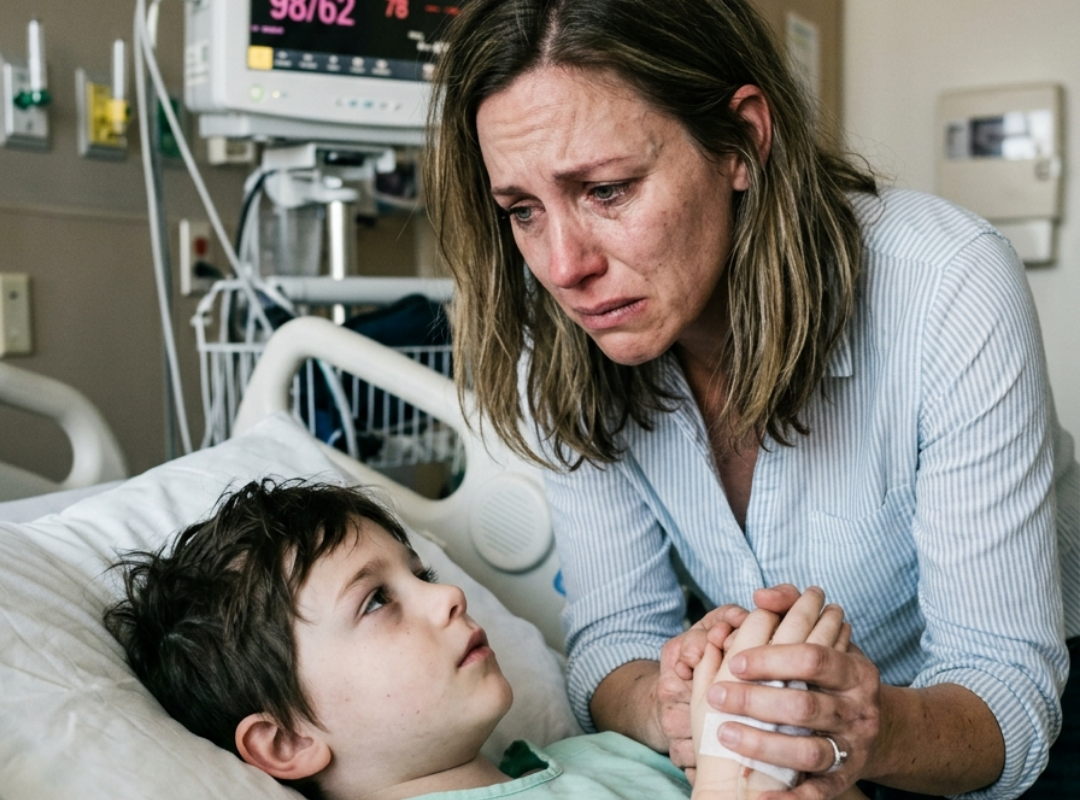
“When My Son Went Into Emergency Surgery, I Texted My Family, ‘He’s Critical—Please Come.’ They all read it. Nobody showed up. For 14 days, I sat alone beside his ICU bed while he fought sepsis. Then, just as he was finally coming home, my phone exploded: ‘Call us now!’ I said nothing. Three days later, I played their voicemails—mortgage bounced, car repossessed, chemo at risk—and smiled coldly, because they had no idea what I’d canceled from that hospital chair…”
The call came at 3:00 on a Tuesday afternoon, the kind of ordinary hour that usually passes without leaving any mark on your life. I was at my desk, halfway…
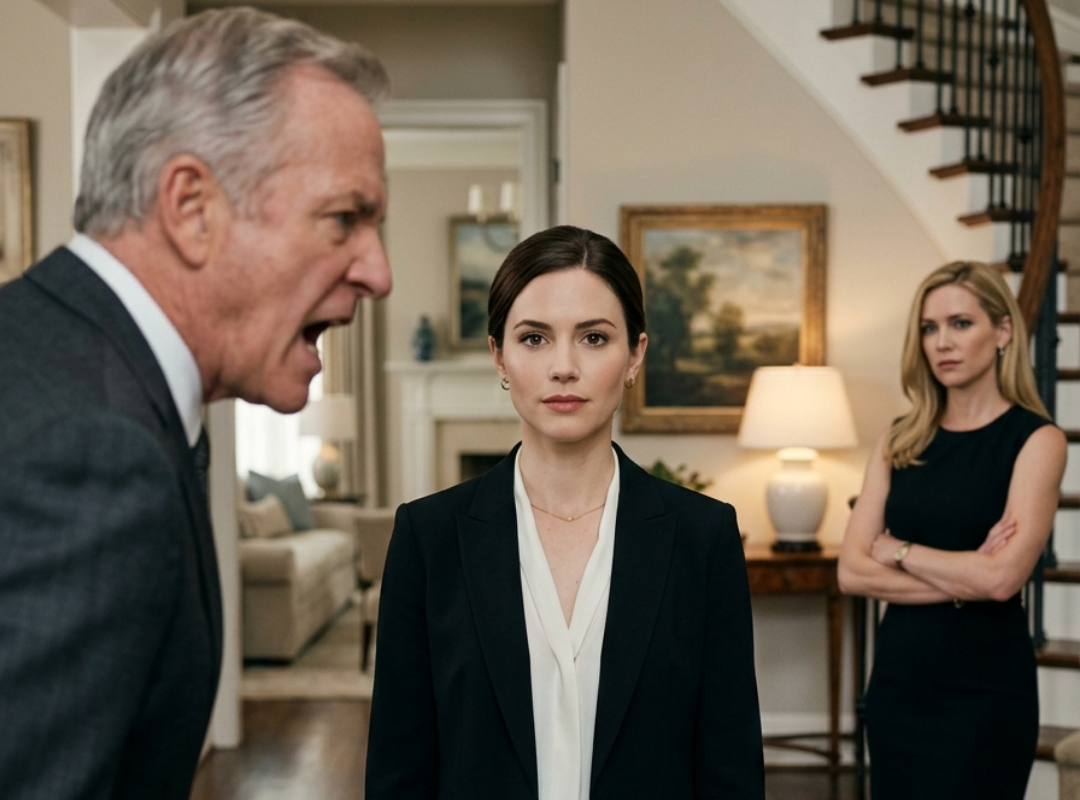
“This year, we’re only inviting your sister’s family!”, Mom texted. I replied right back: “Enjoy yourselves, then”… After I refused to host them for a big Thanksgiving dinner at my house, my father smashed my front window and seized me by the throat hard, snarling, “You think you’re better than us?” My sister kicked me in the ribs, adding, “Some people just need to remember their place.” But …
My name is Claire Whitman, and if you had asked anyone in my hometown who the “good daughter” was ten years ago, they would have said my sister, Megan, before…
“We’re selling the beach house,” Dad declared at my birthday brunch, grinning
The morning of my thirty-fourth birthday started with the kind of lie you tell yourself because it’s easier than facing what your gut already knows. “It’s just brunch,” I muttered…
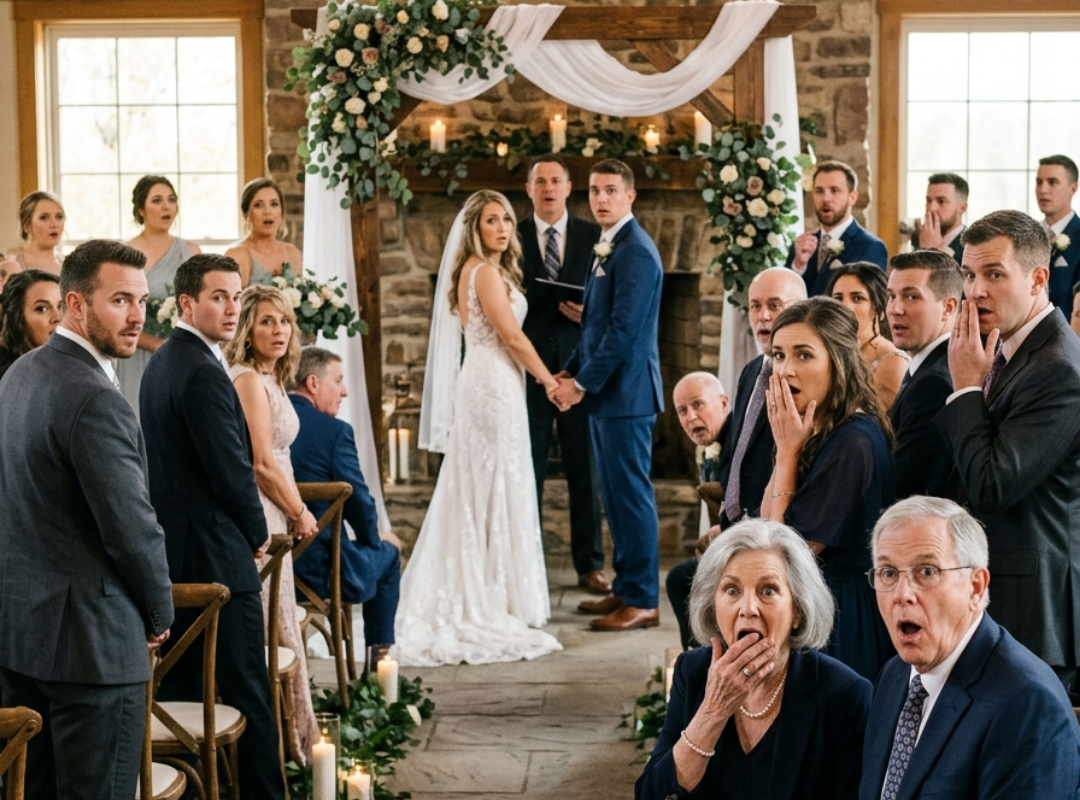
“Walk Yourself,” My Mom Laughed—She Stopped Smiling When The Mayor Stood Up For My “Nobody” Husband
“Walk Yourself,” My Mom Laughed—She Stopped Smiling When The Mayor Stood Up For My “Nobody” Husband I was eight years old when I first imagined my wedding. Not in the…
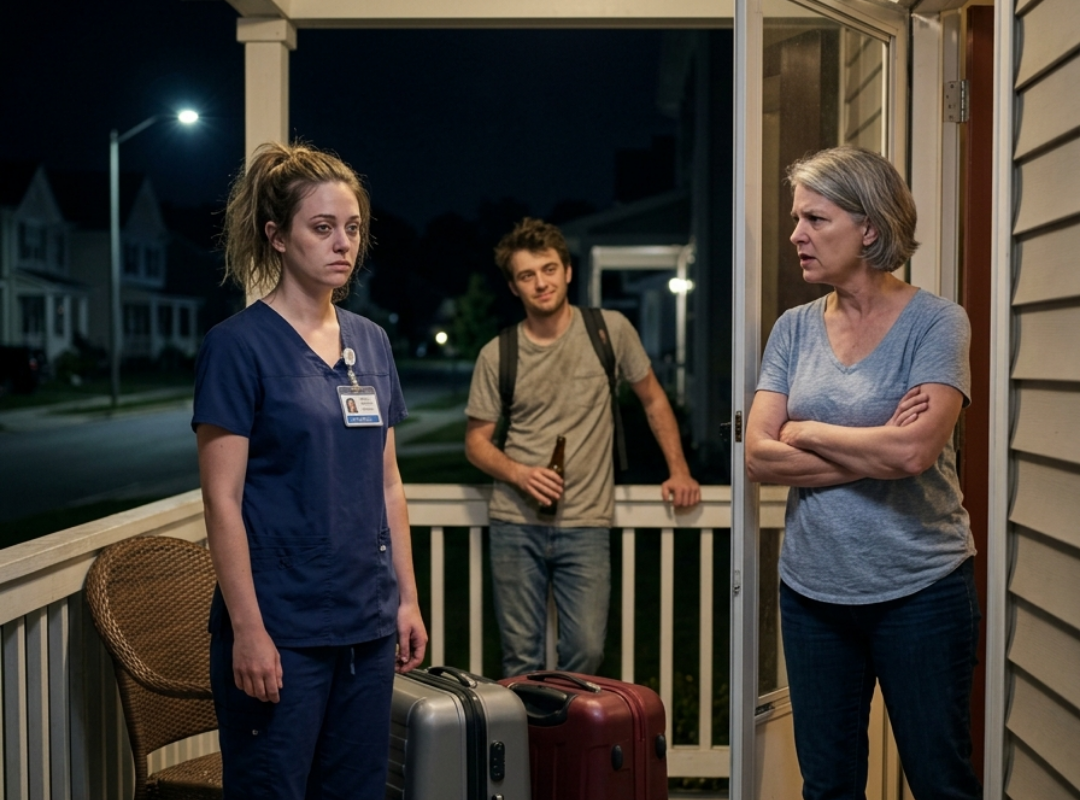
I Came Home from a Twelve-Hour Hospital Shift at 11:47 p.m. and Found My Suitcases Lined Up on the Porch While My Mother Told Me to “Stop Being a Burden” and Leave So My Drifting Cousin Could Take My Room—but Thirty Minutes Later My Late Father’s Lawyer Pulled Up in a Black SUV, Opened a Leather Folder Under the Porch Light, and In Front of All of Them Revealed the One Detail That Turned Their Midnight Eviction into the Biggest Mistake of Their Lives…
By the time Emily Carter turned onto Maplewood Drive, the digital clock on her dashboard read 11:47 p.m., and the kind of exhaustion that settles into a nurse after twelve…
End of content
No more pages to load